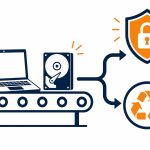

| IT for aged care means running the technology a rest home or retirement village depends on around the clock: the care and medication systems staff sign into every shift, a network that reaches every wing, unit and communal space, accounts that appear and disappear with the roster, and controls that keep resident health information private. |

A rest home on the edge of Christchurch starts its night shift at ten. Two carers, forty-one residents, one laptop on a trolley.
Two hours in, the care system stops loading. The medication round is due next.
The carers do what every care team does. They find the printed forms, write the round out by hand, and keep going.
By morning there are two hours of notes to re-enter, a clinical manager who cannot say for certain that nothing was missed, and nobody on site who knows what actually broke.
That is not an IT inconvenience. In residential care the system that fell over is the record of what was given, to whom, and when.
IT for aged care has to be built around three things an ordinary office never faces. A building that never closes. A workforce that changes every eight hours. And information that residents, families, auditors and the Privacy Commissioner all have a claim on.
What Does IT for Aged Care Cover?
IT for aged care covers four things: the care systems that have to stay available around the clock, a network that reaches every wing, unit and communal space on the site, fast and safe account handling for a shift-based workforce, and the protection of resident health information. Everything else is ordinary business IT.
A rest home operates as several businesses sharing one site. On that site you have somebody’s home, a 24-hour clinical service, a commercial kitchen, a laundry, an activities programme and a small property portfolio. Rest home technology has to hold all of it together.
Each brings its own systems, users and hours. The job is making them behave like one operation instead of six.
How is a rest home different from a medical practice?
A medical centre sees patients and locks the door at six. A rest home never locks the door at all. Our guide to Healthcare IT covers the clinical-practice side, and residential care then adds everything a practice never deals with: night shifts, residents living on site with their own devices, catering and laundry systems, and families who visit and expect to connect.
The practical difference is tolerance for downtime. A practice with a system outage reschedules the afternoon. A care home with a system outage still has to complete the overnight medication round.
Which systems can never be allowed to stop?
Five, in most providers, and they are the ones worth spending money on:
- Care and medication management, because the round happens whether the software is up or not
- Rostering and time and attendance, because a shift that cannot be filled is a care shortfall
- Nurse call and call bell systems, and anything that integrates with them
- Clinical records, interRAI assessments and shift handover notes, which are the evidence of care delivered
- Payroll and resident billing, which are unforgiving about dates
Who is actually using the technology?
A wider range of people than most businesses have. Registered nurses and healthcare assistants on clinical software, kitchen and laundry staff on rosters and ordering, activities coordinators on email and social media, administrators on billing and admissions, and managers on reporting.
Their confidence with technology varies a lot, and so does their patience for it. Anything needing three attempts to sign into at the start of a shift will be worked around within the week.
Then there are the residents and their families, who use the site network every day and will say so when it does not work.

Why Is Care Software Downtime a Clinical Problem?
Because in residential care the software is the record of care delivered, not a back-office convenience. When medication management is unavailable the round still goes ahead, but the evidence of it becomes a paper sheet that somebody re-enters hours later, and every gap in that re-entry is a gap in a resident’s clinical record.
Availability is the part of IT for aged care that has to work before anything else does. A Ngā Paerewa audit judges the completeness of the record, whatever caused the gap.
What actually happens when the system drops out mid shift?
The care continues and the documentation degrades. Staff revert to paper, which is the right call, but paper introduces its own risks: illegible entries, a sheet left in the wrong wing, and a re-entry job handed to whoever is on in the morning.
Meanwhile nobody can see the resident’s history. A carer who has never met that resident has no way to check what changed yesterday, and in an outage that missing history carries more clinical risk than the paperwork.
How long can a village run on paper?
A shift is manageable. Beyond that the re-entry backlog becomes its own source of error, and most providers we work with treat four hours as the point where an outage stops being an annoyance and starts being an incident.
Set that threshold in advance, when nobody is under pressure, because it decides how much redundancy is worth paying for.
What does a defensible backup position look like?
Backups that are tested, held off site, and restorable to a stated time. If care records sit in a vendor’s cloud, the vendor’s own backup is not automatically yours to call on, and the contract is where you find out. A managed backup as a service arrangement makes the restore an obligation somebody owns, with a name against it.
Ask for two numbers in writing: how much data a restore would lose, and how long the restore takes. A provider who cannot give you both has not tested it.
How Should Wi-Fi Work Across a Retirement Village?
By treating the whole campus as one network with one design, instead of adding equipment building by building. Aged care sites are unusually hard to cover: long single-storey wings, thick fire-rated walls, a dining room that fills at lunchtime, a steel-lined kitchen, and independent-living units that can be a two-minute walk from the care office. Retirement village technology has to cover ground no office layout ever asks of it.
Bolt-on coverage is how a village ends up with nine different wireless networks and a laptop that drops its connection halfway down a corridor. Site-wide coverage is the least glamorous line in any IT for aged care budget, and the one staff notice every day.
Why does a village need more than a few extra access points?
Because carers move while they work. A device carried from a resident’s room to the medication trolley to the office has to hand over between access points without dropping the session, and roaming like that has to be designed in from the start.
Coverage also has to reach the places nobody surveys: linen rooms, service corridors, the far end of a wing, and the outdoor paths between buildings.
What about residents, families and visitors?
They get their own network, kept completely separate from the one care systems run on. Resident and visitor internet is a guest WiFi case, so it belongs on a segmented network with its own limits, not on the staff wireless with a password written on a whiteboard in reception.
This matters more in aged care than almost anywhere else, because residents live on site. Their streaming, their video calls with grandchildren and their own laptops are permanent traffic, not an afternoon of visitors.
Fair-use limits on that side keep a Sunday afternoon of family video calls from slowing the medication round.
It is also a selling point. Prospective residents and their adult children now ask about internet in the unit alongside the meals and the parking.
What about independent-living units?
Decide early whether connectivity in those units is a service you provide or something residents arrange themselves, because it changes the cabling, the support load and the expectations you are setting.
Villages treating unit internet as an amenity should say so in the occupation documents and be clear about what support covers. Otherwise the care office inherits a help desk it was never resourced for.
How Should Casual and Night-Shift Staff Be Set Up and Closed Down?
With a defined process that runs off the roster itself. Aged care turns over staff faster than almost any other sector, uses agency and casual carers at short notice, and runs shifts when no manager is on site, so account setup and closure has to work without a conversation.
The two failures are equally common. A new carer arrives for a first shift with no login and shares somebody else’s. A leaver’s account stays active for months after the last roster.

How quickly can a new carer be ready to work?
Same day, if the request comes through a set process and the role profiles already exist. Build accounts against roles instead of individuals, so a healthcare assistant gets exactly what a healthcare assistant needs and nothing else.
That single change removes most of the delay, and most of the problem of people holding access they never needed.
How do shared devices work on a wing?
Each person signs in as themselves on a shared device, and the device itself is enrolled and controlled centrally. Proper mobile device management lets a trolley laptop or a wing tablet be locked to the applications it is meant to run, wiped if it goes missing, and kept patched without anyone chasing it around the site.
Shared logins are the common shortcut, and they remove accountability. If four carers use one account, the clinical record cannot say who documented what, and neither can you.
What happens at the end of a roster?
Access is removed on the day, not at the next review. For agency and casual staff, set accounts to expire automatically at the end of the engagement and renew them deliberately if the person comes back.
Expiry dates remove the reliance on someone remembering. They are the single cheapest control in a sector with this much turnover.
What Does the Health Information Privacy Code Mean for a Rest Home?
The Health Information Privacy Code 2020 sets specific obligations for how resident health information is collected, stored, accessed, corrected and disclosed, and those obligations sit with the provider regardless of which software vendor holds the data. Residential care collects more of it, over longer periods, than most health settings.
A resident may live in your care for years. The record follows them the whole way, and so does your duty over it. The exposure is usually a complaint to the Privacy Commissioner, a finding at your next audit, and a conversation with a family who talk to every other family in the village.
What counts as health information here?
More than the clinical notes. Care plans, medication charts, incident reports, dietary and mobility needs, behaviour support plans, GP and specialist correspondence, and anything recorded about a resident’s condition all sit inside the definition.
Photographs taken for activities or social media can too, once they are attached to a named resident with a condition. Providers most often overlook this category.
Who should be able to see a resident’s record?
The people delivering that resident’s care, and nobody else by default. Kitchen staff need dietary requirements, not the clinical history behind them, and access should be shaped that way from the start.
Role-based access is also what makes an audit answerable in an afternoon instead of a fortnight.
What about families and enduring powers of attorney?
Record who holds authority for each resident and what they are entitled to see, and keep that record where staff can check it at three in the morning. Family relationships in residential care are frequently complicated, and a well-meaning disclosure to the wrong relative is a privacy breach.
One obligation is new. Rule 3A of the Code, in force since 1 May 2026, means that when you collect information about a resident from anyone other than the resident, such as a family member, a GP or a previous provider, you must take reasonable steps to make the resident aware. Residential care admissions run almost entirely on indirect collection, so check your admission paperwork covers it.
What Does IT for Aged Care Cost?
Most South Island providers we work with land between $70 and $130 per staff user per month for fully managed aged care IT support, with clinical software licensed separately by the vendor and site infrastructure treated as a project. Beds are the wrong unit to budget by, because a 60-bed home and a 60-unit village have very different technology footprints.
| Where the money goes | What it covers | How it is usually priced |
|---|---|---|
| Managed support and monitoring | Help desk, patching, monitoring, security tooling, vendor liaison | Per staff user per month |
| Care and clinical software | Care planning, medication management, clinical records | Per bed or per resident, by the software vendor |
| Site network and wireless | Access points, switching, cabling, segmentation across wings and units | Project cost, refreshed every five to seven years |
| Devices | Trolley laptops, wing tablets, office desktops, shared terminals | Purchased or leased, replaced on a cycle |
| Backup and continuity | Off-site backup, tested restores, an agreed recovery time | Per user or per terabyte, monthly |
A single-building home is straightforward. A campus with detached units, long external runs and a heritage main building is not, and no honest quote skips a site visit.
Where do providers usually underspend?
On the network and on backup, because neither shows up until the day it matters. The visible spend goes to devices and to clinical software, which are the parts staff ask for.
Charitable and community-owned providers feel this hardest, and the answer is rarely to spend more. It is to spend the same money in the order that removes the most risk.
What Should an Aged Care Provider Fix First?
Work through six steps in order, and stop treating them as an annual project. Each one closes a specific failure that shows up in a real shift:
- List every system a shift depends on, and mark the ones that cannot be down for four hours.
- For each of those, write down how long a restore takes and how much data it would lose. Get it in writing from the vendor.
- Survey the network across the whole site, including units, kitchens, laundries and the paths between buildings.
- Separate resident, family and visitor traffic from the care network completely.
- Move account setup and closure onto the roster, with expiry dates for casual and agency staff.
- Map who can see what, then remove the access that nobody can justify.
Most providers do not have the internal capacity to run that list and deliver care at the same time, which is where managed IT services for aged care providers fit: the work gets scheduled instead of waiting for an incident.
Two things worth doing this week
Ask your clinical manager what the care team did the last time the care system was unavailable, and how long it took to catch the records up. That story tells you more than any risk register.
Then walk the far end of your longest wing with a work device and watch the signal. If it drops between the last two rooms, your night staff already know.
Technology That Lets Your Team Get Back to the Residents
Exodesk has supported South Island businesses since 1989 and works with organisations across Canterbury, Otago and Southland from offices in Christchurch and Dunedin. We design site networks for campuses that were never built for them, get care systems onto a backup and recovery footing you can defend, and take the account churn of a shift-based workforce off your clinical managers. Done properly, IT for aged care is available when the shift needs it and undemanding the rest of the time.
Contact us today to discuss how we can help your business or connect with us on LinkedIn to stay updated with more insights.
Frequently Asked Questions
What is IT for aged care?
Aged care technology is the combined set of systems a residential provider runs to deliver and evidence care: clinical and medication software, rostering, nurse call, site-wide connectivity, and the security controls around resident data. It differs from general business technology because it operates continuously and because failures affect care delivery, not just administration. Providers are accountable for it even when a software vendor hosts the data.
How is aged care IT different from healthcare IT?
Healthcare IT generally serves clinical practices, where patients arrive for an appointment and leave again. Aged care serves a residential setting where people live on site permanently, care runs 24 hours a day, and the operation blends clinical work with hospitality, property and family services. The compliance obligations overlap, but the availability requirements and the user base are different.
What software do rest homes and retirement villages use?
Every New Zealand provider uses interRAI, the assessment system that has been mandatory in aged residential care since July 2015, and specifically the Long Term Care Facilities assessment. Around it sits care management software covering care planning, clinical records and medication management, plus rostering, payroll, resident billing and a nurse call system. Larger villages add property and occupation-agreement software for the independent-living side. The technology job is integrating these so staff are not entering the same information three times.
How do you keep resident data safe under the Health Information Privacy Code?
Limit access by role so staff see only what their job requires, keep an audit trail of who viewed and changed each record, encrypt data at rest and in transit, and remove access the day someone leaves. Document who holds authority for each resident and what they may be told. Note that Rule 3A of the Code, in force since 1 May 2026, also requires you to make a resident aware when you have collected their information from a family member, GP or previous provider. The obligations remain with the provider even when the data sits in a vendor’s cloud.
What happens if the care management system goes down overnight?
Care continues on paper and the documentation is reconstructed afterwards, which is where the clinical risk sits. The gap shows up later at a Ngā Paerewa audit, because a Designated Auditing Agency assesses the completeness of the record rather than the reason it was incomplete. Providers should agree in advance how long an outage can run before it is escalated as an incident, and hold a tested restore process with a stated recovery time. Most treat four hours as the threshold.
How should Wi-Fi be set up across a retirement village?
Design the whole campus as one network instead of adding access points building by building, and survey for the awkward areas: long wings, thick walls, kitchens, laundries and detached units. Staff devices need to move between access points without dropping the session. Resident, family and visitor internet belongs on a separate segmented network with its own limits.
How do you manage IT accounts for casual and night-shift staff?
Build accounts from role profiles so a new carer can be ready the same day with exactly the access the role needs. Set expiry dates on casual and agency accounts so they close automatically at the end of the engagement. Shared logins should be avoided entirely, because they make the clinical record unable to show who documented what.
What does IT for aged care cost in New Zealand?
Fully managed IT support typically runs between $70 and $130 per staff user per month, with care and clinical software licensed separately by the vendor, usually per bed or per resident. Site network and cabling work is a project cost, not a monthly one, and varies with the layout of the campus. Any quote without a site visit is a guess.
Can a small rest home afford properly managed IT?
Yes, and smaller providers often benefit most, because they have no internal IT capacity at all. The practical approach is to sequence the spend instead of increasing it: secure the systems a shift depends on, get backup and restore working, then improve the network. Charitable and community-owned providers can usually fund this within existing operating budgets.
Does Exodesk support aged care providers in Canterbury, Otago and Southland?
Exodesk works with organisations across the South Island from offices in Christchurch and Dunedin, and has supported New Zealand businesses since 1989. For residential care that covers site network design, care system availability and backup, staff account lifecycle, device management and resident-facing connectivity. The starting point is a site visit and a review of what a single shift actually depends on.